
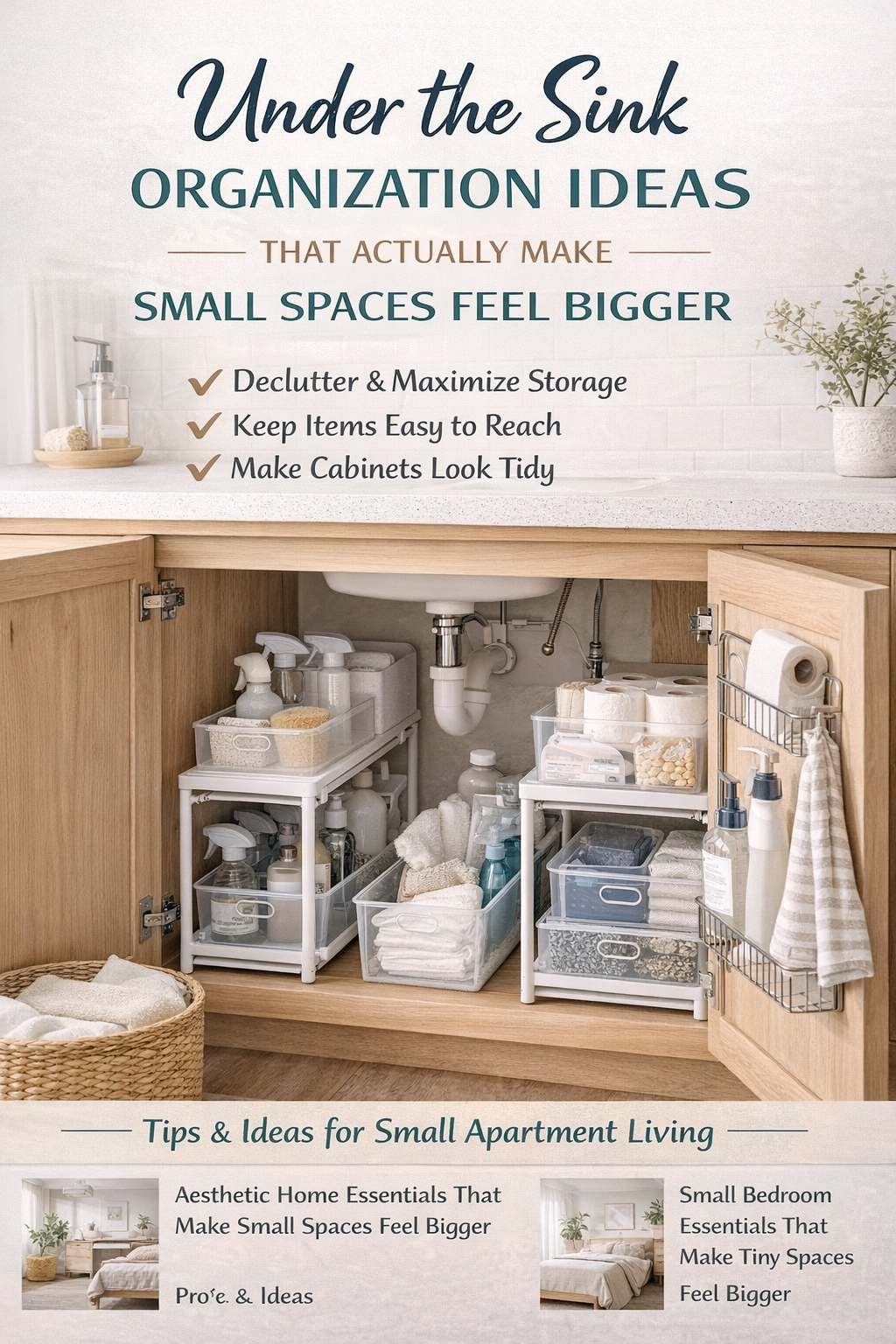
If there is one place in the home that gets messy fast, it is the space under the sink. Whether it is in the kitchen or bathroom, this small cabinet often becomes a catch-all for cleaning sprays, extra sponges, trash bags, paper towels, soap, toiletries, and random items you forgot you even had.
The good news is that under-the-sink organization does not have to be expensive or complicated. With the right setup, you can turn a crowded cabinet into a clean, functional space that makes everyday life easier.
In small homes and apartments, every inch matters. That is why organizing under the sink can make such a big impact. It reduces clutter, keeps essentials easy to reach, and helps your home feel calmer, cleaner, and more put together.
Disclosure: This post may contain affiliate links. As an Amazon Associate, I earn from qualifying purchases.
Why Under-the-Sink Spaces Get Messy So Quickly
Under-sink cabinets are tricky because they are not simple open boxes. Most have pipes, awkward corners, and limited vertical space, which makes them harder to organize than a standard shelf or drawer.
They also tend to hold products we use often, which means things get moved around constantly. When items do not have clear zones, the cabinet quickly turns into a crowded mix of bottles, backup supplies, and loose cleaning tools.
The easiest fix is not buying more storage at random. It is creating simple categories and choosing organizers that actually work around your cabinet layout.
If you are also organizing other hard-to-store areas, you may also like:
- Small Apartment Kitchen Organization Ideas That Actually Make Life Easier
- Best Organization Products for Small Bathrooms
- 10 Aesthetic Home Essentials That Make Small Spaces Feel Bigger
Step 1: Empty Everything Out First
Before buying any organizers, take everything out of the cabinet.
This gives you a chance to see what you actually use and what is just taking up space. Toss anything expired, leaking, broken, or no longer useful. Then wipe down the cabinet while it is empty so you are starting fresh.
As you sort, group items into simple categories like:
- daily cleaning supplies
- dishwashing products
- extra sponges and cloths
- trash bags
- personal care items
- backup products
This first step makes everything else easier because you will know exactly what needs a home.
Step 2: Measure the Cabinet Carefully
This is one of the most important steps, and it is the one people skip most often.
Under-sink cabinets are usually oddly shaped, and pipes can take up more room than expected. Measure the width, depth, and height of the cabinet, and note exactly where the plumbing sits.
That way, you do not waste money on organizers that look great online but do not actually fit.
In small homes, flexible storage works best. Look for pieces that fit around pipes rather than forcing you to work against them.
What to pay attention to
- the depth of the back corners
- the open space on either side of the pipes
- whether the cabinet door can close with added storage
- how much vertical room you really have
A cabinet that looks roomy at first glance may have very little usable space once you account for plumbing.
Step 3: Use Clear Bins to Create Simple Categories
Clear bins are one of the easiest ways to organize under the sink because they instantly create order while keeping everything easy to find.
Instead of loose bottles and supplies sliding around, you can group similar items together in a way that makes sense for your routine.
For example, you can use:
- one bin for sprays
- one bin for sponges and scrubbers
- one bin for dishwasher pods or dish soap refills
- one bin for bathroom cleaning products
- one small bin for extras and backups
Clear bins also make cleaning easier because you can pull out an entire category at once.
Best tip
Choose bins with open tops or easy-grip handles. In small cabinets, convenience matters just as much as storage.
Helpful option
Clear handled bins or narrow open-top organizers work especially well here.
Step 4: Add a Pull-Out Drawer for Easy Access
One of the biggest under-the-sink problems is that items get lost in the back. A pull-out organizer solves that quickly.
Instead of bending down and digging into a dark cabinet, you can slide the organizer out and see everything at once.
This is especially helpful for:
- dishwashing supplies
- cleaning products
- hair products
- backup toiletries
- extra soap or paper products
In small spaces, accessibility matters just as much as storage. A good pull-out drawer helps you use the full depth of the cabinet without turning it into a cluttered mess.
Best for
- deep cabinets
- people who store backups below the sink
- anyone tired of reaching blindly into the back
What to avoid
Do not choose a bulky drawer system if your plumbing takes up most of the center space. In that case, narrow side drawers often work better than one wide organizer.
Step 5: Take Advantage of Vertical Space
Even tiny cabinets usually have unused vertical space. A small riser or stackable shelf can instantly create more usable room and make the cabinet feel more functional.
This works especially well for:
- shorter bottles
- extra sponges
- backup soap
- dishwasher tablets
- folded cloths or paper products
A simple setup works best. Keep everyday items on the lower level and place backups above.
Just be careful not to overcrowd the cabinet. The goal is to make things easier to reach, not harder.
Best tip
A narrow or adjustable shelf is often the best choice because it can work around the plumbing instead of wasting the middle of the cabinet.
Helpful option
Low-profile stackable shelves or adjustable cabinet risers are usually the easiest fit.
Step 6: Use the Cabinet Door for Extra Storage
When space is limited, the inside of the cabinet door becomes valuable storage space.
Over-the-door organizers, slim door baskets, or adhesive hooks can hold lightweight items and free up room below.
Good things to store on the door include:
- gloves
- microfiber cloths
- scrub brushes
- trash bags
- small cleaning tools
This is a smart solution for apartments and small homes where every inch counts.
Important note
Avoid storing heavy bottles on the door. Too much weight can strain the hinges over time.
Best for renters
Adhesive hooks and removable door organizers are usually the most renter-friendly option because they do not require drilling.
Step 7: Label Everything to Make It Easier to Maintain
Labeling may feel optional, but it helps a lot.
Once you have created categories, labels make it easier for everyone in the home to know where things belong. That means the cabinet stays organized longer instead of slowly returning to chaos.
Simple labels like these are enough:
- dish soap
- sponges
- cleaning sprays
- backup supplies
- trash bags
This is especially helpful if you tend to buy duplicates because you cannot remember what you already have.
Best tip
Keep labels simple and easy to read. You do not need anything fancy. The goal is function, not perfection.
Best Under-the-Sink Organization Ideas for Kitchens
Kitchen sink cabinets usually need to hold both daily-use items and backups, so keeping the setup simple is key.
A practical kitchen setup might include:
- one handled bin for dishwashing supplies
- one narrow riser for extra sponges or dishwasher tablets
- one small basket for trash bags
- one pull-out organizer for sprays and frequently used products
- one waterproof liner on the bottom of the cabinet
A liner may seem like a small detail, but it is one of the smartest additions you can make. Under-sink areas are more likely to deal with moisture, and a liner helps protect the cabinet while making cleanup easier.
Best kitchen tip
Store the things you use every day in the front and keep backups toward the back or higher up. That one shift makes the cabinet much easier to maintain.
You may also like:
Small Apartment Kitchen Organization Ideas That Actually Make Life Easier
Best Under-the-Sink Organization Ideas for Bathrooms
Bathroom cabinets can get cluttered quickly because they usually store a mix of personal care items, cleaning products, and backups.
The easiest way to keep them functional is to organize by how often you use each item.
A simple bathroom setup might look like this:
- front area for daily skincare or haircare
- side bin for bathroom cleaning products
- small basket for backup toothpaste, soap, or tissues
- drawer organizer for small items like razors, cotton pads, or floss
Bathroom storage tends to look messy fast because there are usually so many small products involved. Clear containers, narrow bins, and drawer trays can make a huge difference.
Best bathroom tip
If your vanity is shallow, use shorter bins and avoid tall stacked organizers that block access to daily items.
You may also like:
Best Organization Products for Small Bathrooms
Common Mistakes to Avoid
A few common mistakes can make under-the-sink spaces harder to use instead of easier.
1. Buying organizers before measuring
This often leads to products that do not fit around the pipes or waste valuable storage space.
2. Overfilling the cabinet
When too much is stored in one place, the system becomes difficult to maintain. It is better to keep only what makes sense there.
3. Mixing daily-use items with backups
If the things you use all the time are buried behind extras, the setup will not last. Keep daily-use products front and center.
4. Ignoring leaks or moisture
Waterproof bins, shelf liners, and trays help protect the space and make cleanup easier.
5. Choosing style over function
Pretty organizers are great, but they still need to work with your actual cabinet layout.
A Simple Under-the-Sink Setup That Works for Most Homes
If you want a system that is practical without overthinking it, start with this:
- one waterproof liner
- two to four clear bins
- one pull-out organizer
- one small riser or shelf
- one door organizer or a few adhesive hooks
That is enough to create structure without making the cabinet feel overcrowded.
The best organizing systems are the ones you can actually maintain.
How to Keep It Organized Long-Term
Once the space looks good, the next goal is keeping it that way.
A few simple habits help:
- put items back in the same zone every time
- keep backups separate from daily-use products
- wipe up leaks quickly
- check for expired or unused items once a month
- avoid buying new organizers unless they solve a real problem
In a small space, maintenance matters more than perfection. A simple system you can keep up with is always better than an elaborate one that falls apart in a week.
Final Thoughts
Under-the-sink storage may be one of the smallest spots in the home, but organizing it well can make a surprisingly big difference.
It saves time, cuts down on clutter, and helps your kitchen or bathroom feel more functional every day. In small homes and apartments, those little improvements add up quickly.
You do not need a huge budget or a full makeover to make it work. Start by clearing out what you do not need, measuring the space, and adding a few smart organizers that actually fit your cabinet.
The goal is not perfection. It is simply to create a system that makes everyday life easier and your home feel a little more calm, organized, and intentional.
You May Also Like
- Best Organization Products for Small Bathrooms
- 10 Aesthetic Home Essentials That Make Small Spaces Feel Bigger
- Small Apartment Kitchen Organization Ideas That Actually Make Life Easier
Leave a Reply