
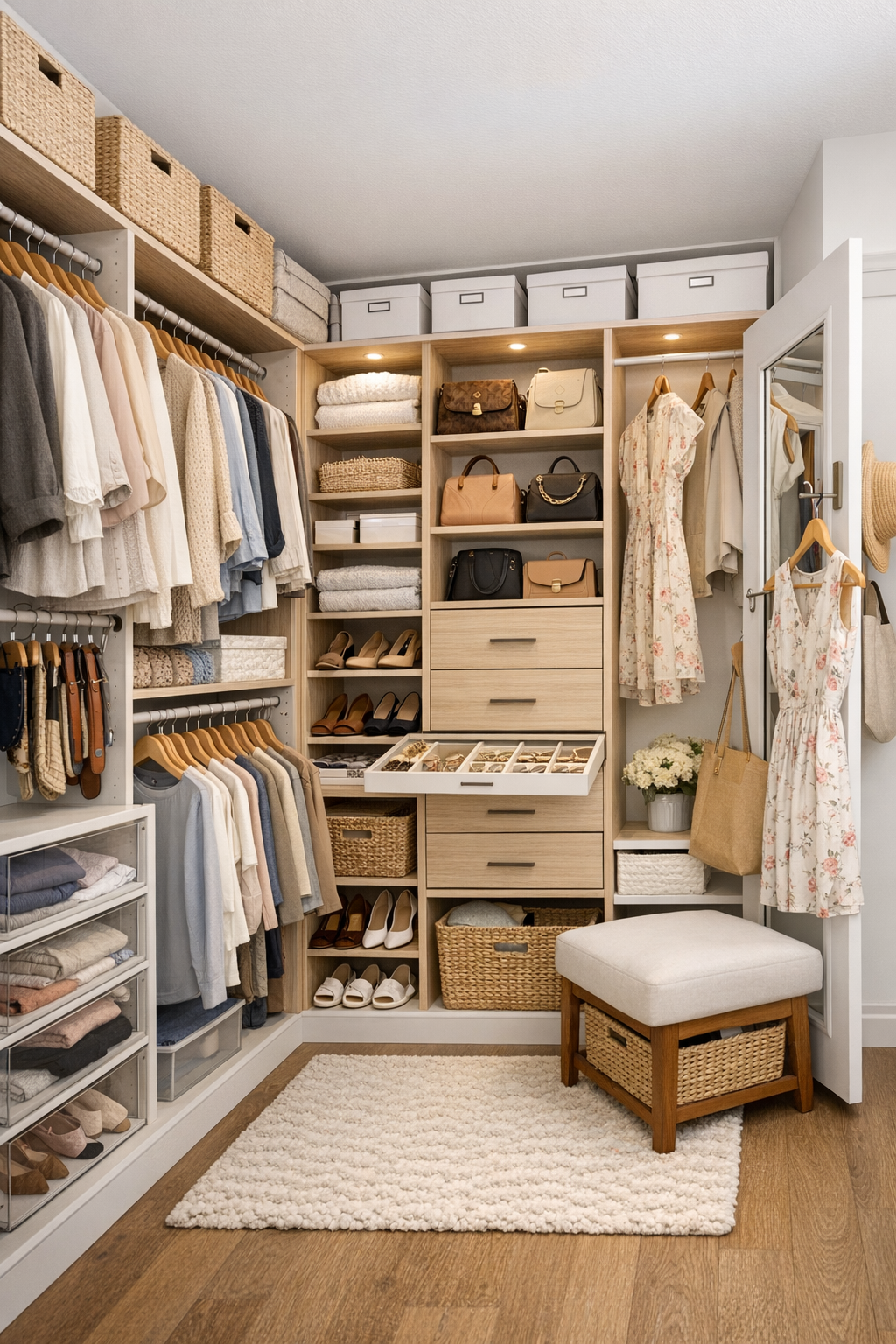
A messy closet can make an entire room feel more stressful. Even if the rest of your home looks tidy, an overstuffed closet can make everyday routines harder, waste time in the morning, and create the feeling that there is never enough space.
The good news is that closet organization does not have to be complicated or expensive. With the right approach, even a small closet can feel more functional, easier to use, and surprisingly spacious. The goal is not to create a picture-perfect closet that stays untouched. The goal is to build a system that works for real life.
In small homes and apartments, closet space matters even more. When storage is limited, every inch has to work harder. That is why a well-organized closet can make such a big difference. It helps reduce clutter, keeps everyday items easier to find, and makes your room feel calmer and more put together.
This guide shares practical closet organization ideas that help small spaces feel bigger, look cleaner, and function better every day.
Disclosure: This post may contain affiliate links. As an Amazon Associate, I earn from qualifying purchases.
Why Closets Get Messy So Quickly
Closets often become cluttered for a simple reason: they are trying to do too many jobs at once.
A closet may need to hold everyday clothing, shoes, bags, extra bedding, off-season items, accessories, laundry, and random overflow from the rest of the room. Without clear categories, things get crowded fast.
Closets also become messy because they often have more vertical space than usable storage. Many standard closets have one rod and one shelf, which leaves a lot of wasted room underneath and above. When that extra space is not used well, clothing piles up, shoes scatter, and smaller items get lost.
Another common problem is that people try to organize a closet without decluttering first. No storage solution works well if the closet is already overfilled with items you do not wear, do not use, or forgot you owned.
If you are organizing other small-space problem areas too, you may also like:
- Under-the-Sink Organization Ideas That Actually Make Small Spaces Feel Bigger
- Small Apartment Kitchen Organization Ideas That Actually Make Life Easier
- 12 Space-Saving Storage Essentials for Small Homes
- 10 Aesthetic Home Essentials That Make Small Spaces Feel Bigger
Step 1: Start by Taking Everything Out
The best way to organize a closet is to begin with a full reset.
Take everything out so you can see exactly what you have. This includes clothes, shoes, bags, storage bins, old hangers, and anything that has slowly collected on the closet floor or shelf.
This step helps in two ways. First, it shows you how much space you are actually working with. Second, it forces you to make decisions about what belongs in the closet and what does not.
As you sort, create simple piles such as:
- keep
- donate
- toss
- move to another room
- seasonal storage
A closet often feels too small when the real issue is not just limited space, but too many items competing for it.
Step 2: Declutter Before You Organize
It is tempting to buy bins, baskets, and hangers right away, but closet organization works best when you declutter first.
Ask yourself:
- Do I wear this regularly?
- Does this fit my current lifestyle?
- Is this damaged, outdated, or no longer useful?
- Would I buy this again today?
You do not need to create a minimalist closet if that is not your goal. You just need to be realistic about what you actually use.
The more edited your closet is, the easier it becomes to keep organized. Small closets work better when they hold the right items, not just more items packed tightly together.
Best decluttering tip
If you are not sure about something, place it in a temporary “maybe” bin for a few weeks. If you do not reach for it, that makes the decision easier later.
Step 3: Measure Your Closet Before Buying Anything
This is one of the most important steps, especially in apartments and small homes.
Closets vary a lot. Some are deep but narrow. Some have awkward shelves. Some have very little hanging room. Others have wasted floor space that could be used better with the right storage.
Before buying organizers, measure:
- closet width
- closet depth
- shelf height
- hanging rod height
- floor space
- open wall space inside the closet door if applicable
This helps you choose storage that truly fits instead of buying organizers that look good online but do not work in your actual closet.
Step 4: Group Everything by Category
Once you know what you are keeping, group it into categories before putting anything back.
This step creates structure and helps you see what kind of storage you really need.
Simple categories may include:
- everyday tops
- pants and jeans
- dresses
- jackets
- shoes
- bags
- accessories
- workout clothes
- sleepwear
- seasonal items
When items are grouped by category, they are easier to store and much easier to find later. Closet organization gets harder when clothing is mixed randomly and nothing has a clear home.
Step 5: Upgrade Your Hangers
One of the easiest closet upgrades is also one of the most effective: better hangers.
Bulky, mismatched hangers make closets feel more crowded and disorganized. Slim hangers create a cleaner look and can help you fit more clothing while keeping everything more uniform.
Why this works
- clothes hang more evenly
- the closet looks instantly neater
- slim hangers take up less space
- matching hangers create a more polished look
Best for
- small closets
- shared closets
- apartment bedrooms with limited storage
A closet does not need expensive upgrades to feel better. Sometimes one simple change like matching slim hangers can make the whole space feel lighter and more intentional.
Step 6: Use Vertical Space More Efficiently
Many closets waste a lot of vertical space. If your closet only has one hanging rod and one high shelf, there is usually room to use that space better.
A few ways to do that include:
- adding a second hanging rod for shorter items
- using stackable shelves
- adding hanging organizers for folded items
- placing bins on the top shelf for less-used items
- using shelf dividers to keep stacks neat
Best tip
Store the things you use most often between eye level and waist level. Use higher shelves for seasonal or occasional items.
This one shift can make a closet much easier to maintain because daily items are no longer buried behind things you barely use.
Step 7: Make the Closet Floor Work Harder
Closet floors often become dumping grounds for shoes, bags, laundry, or random overflow. That is one reason closets start to feel chaotic fast.
Instead of leaving the floor as open clutter space, give it a clear purpose.
The closet floor can be used for:
- a low shoe rack
- a few labeled bins
- a laundry basket
- a small drawer unit
- under-shelf baskets
- folded storage containers for seasonal items
What to avoid
Do not fill every inch of floor space just because it is available. A little breathing room makes the closet easier to use and helps it feel less cramped.
Step 8: Use Bins and Baskets for Small Items
Smaller items are often what make a closet look messy. Scarves, belts, bags, socks, hats, workout gear, and accessories can quickly turn into visual clutter if they do not have a home.
Bins and baskets help group those items together so they stay contained.
Great uses for bins and baskets
- handbags
- swimsuits
- scarves
- belts
- hats
- sleepwear
- workout clothes
- seasonal accessories
Best tip
Label the bins simply. You do not need a complicated system. Even basic labels help you maintain the closet long-term and make it easier to put things back where they belong.
Step 9: Organize Shoes Intentionally
Shoes are one of the biggest closet clutter problems, especially in small spaces.
If they are left loose on the floor, they instantly make the closet feel messier and smaller. A better setup depends on how many shoes you actually wear and the kind of closet you have.
A few good options include:
- a slim shoe rack
- clear shoe boxes
- under-bed shoe storage for out-of-season pairs
- over-the-door storage
- a shelf dedicated to everyday shoes
Best tip
Keep your most-worn shoes easy to reach and move special-occasion or seasonal pairs elsewhere if closet space is limited.
If your bedroom closet is tight, you may also like:
Small Bedroom Essentials That Look Beautiful and Reduce Clutter
Step 10: Store Seasonal Items Separately
One of the easiest ways to make a closet feel bigger is to stop asking it to hold everything all year long.
Bulky coats, heavy sweaters, boots, summer hats, beachwear, and seasonal extras can take up valuable closet space even when they are not currently in use.
A better system is to rotate by season.
Good places for seasonal storage
- under-bed containers
- top closet shelf bins
- vacuum-seal bags
- another closet if available
- labeled storage boxes in a hidden area
This frees up room for the items you actually need now and makes the closet feel much more manageable.
Step 11: Create a Small Accessories Zone
Accessories often get lost because they are small and easy to scatter. A dedicated zone makes a big difference.
This can include:
- a drawer organizer for jewelry
- hooks for bags
- a tray for watches or sunglasses
- small bins for scarves or belts
- clear divided containers for smaller items
Why this matters
When accessories do not have a place, they often end up on dressers, chairs, or closet shelves, creating clutter both inside and outside the closet.
A small organized accessories area helps keep the whole room looking tidier.
Step 12: Use the Closet Door for Extra Storage
The back of the closet door is often overlooked, but it can be useful storage space in a small room.
Depending on your closet setup, the door can hold:
- hooks for robes or bags
- over-the-door shoe storage
- small accessory organizers
- hanging storage for scarves or hats
Best for
- small bedrooms
- apartment closets
- closets with limited shelving
This is one of the easiest ways to add function without taking up extra room inside the closet itself.
Closet Organization Ideas for Small Bedrooms
Small bedroom closets need to work harder because they are often the main storage area in the room.
The best strategies for small bedroom closets usually include:
- slim hangers
- vertical shelf storage
- under-bed seasonal storage
- a small shoe rack
- labeled bins for accessories
- a laundry basket that fits neatly in one corner
- decluttering more often to prevent overflow
If your whole room feels tight, not just the closet, you may also like:
Small Apartment Must-Haves That Make Everyday Life Easier
Closet Organization Ideas for Linen or Hall Closets
Not every closet holds clothing. Linen closets, hallway closets, and utility closets also need smart systems, especially in small homes.
A simple setup for these closets may include:
- towels grouped by size
- one bin for cleaning products
- one bin for backup toiletries
- labeled baskets for medicine, extra soap, or paper goods
- shelf dividers to keep folded items neat
- higher shelves used for less-frequent items
Best tip
Do not treat a hallway or linen closet like a miscellaneous overflow zone. It works better when it has simple categories just like a clothing closet.
Common Closet Organization Mistakes to Avoid
A few mistakes can make a closet harder to maintain, even when it looks good at first.
1. Buying organizers before decluttering
This usually leads to more stuff in prettier containers, not a more functional closet.
2. Keeping too many “just in case” items
Small closets work best when they hold what you actually use.
3. Overfilling shelves
Overstacked shelves quickly collapse into visual clutter.
4. Ignoring vertical space
One rod and one shelf are rarely enough for a small-space closet.
5. Not creating clear categories
Without categories, the closet slowly turns back into a mixed pile.
6. Storing daily items too high or too low
Frequently used items should be easy to reach. Storage works better when your routine is taken into account.
A Simple Closet Setup That Works for Most Small Spaces
If you want a practical closet system without overcomplicating it, start here:
- matching slim hangers
- one small shoe rack or shoe organizer
- two to four labeled bins
- one hanging organizer or shelf divider set
- one dedicated section for accessories
- seasonal items stored separately
That is often enough to create structure without making the closet feel crowded.
The best closet system is not the fanciest one. It is the one you can keep up with easily.
How to Keep a Closet Organized Long-Term
Once your closet is organized, the next goal is keeping it that way.
A few habits help a lot:
- put things back in the same category
- do a quick reset once a week
- remove items you no longer wear regularly
- rotate seasonal items when the weather changes
- avoid stuffing the closet past capacity
- keep donation items in a small bag or bin so they leave the space quickly
Closet organization is not about perfection. It is about making daily life easier.
How to Choose Closet Organizers That Actually Help
Before buying anything, think about the problem you are trying to solve.
If your biggest issue is too many shoes, start there. If folded items keep collapsing, use shelf dividers or hanging storage. If accessories are always scattered, create a small accessories zone. If the closet feels packed, decluttering and seasonal rotation may matter more than buying more storage.
The best organizers are the ones that fit your real routine. In a small space, simple systems almost always work better than overly complicated ones.
Final Thoughts
Closet organization can make a bigger difference than people expect. A well-organized closet saves time, reduces stress, and helps a room feel cleaner and more spacious.
You do not need a custom closet system or a huge budget to make it work. Start with what you have, remove what you do not need, and build a simple setup that fits your actual space and daily life.
In small homes and apartments, those little improvements matter. When your closet works better, your whole room often feels better too.
You May Also Like
- 12 Space-Saving Storage Essentials for Small Homes
- Under-the-Sink Organization Ideas That Actually Make Small Spaces Feel Bigger
- Small Apartment Kitchen Organization Ideas That Actually Make Life Easier
- 10 Aesthetic Home Essentials That Make Small Spaces Feel Bigger
- Small Apartment Must-Haves That Make Everyday Life Easier